What's Included
- Porcelain and ceramic tile flooring
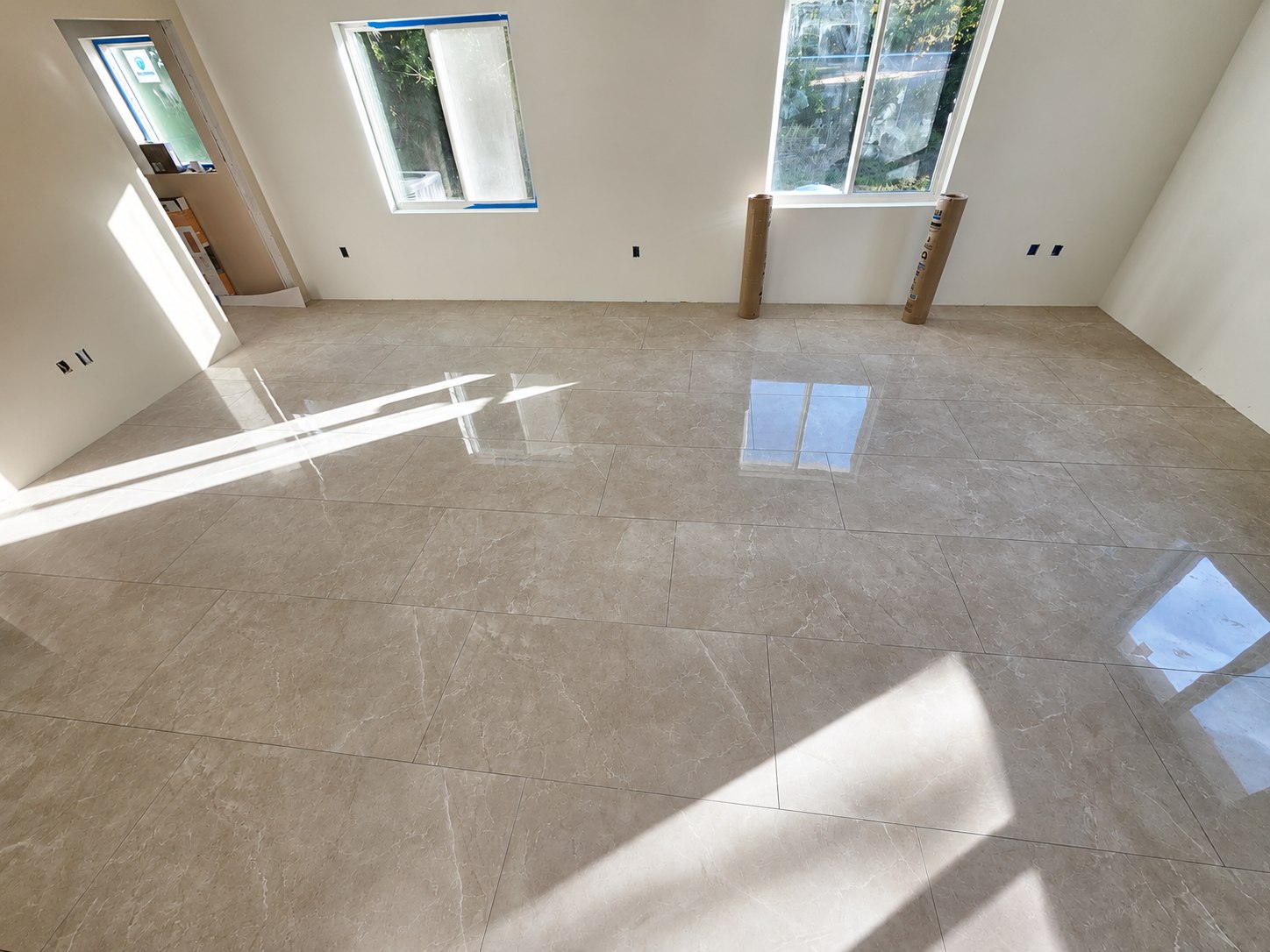
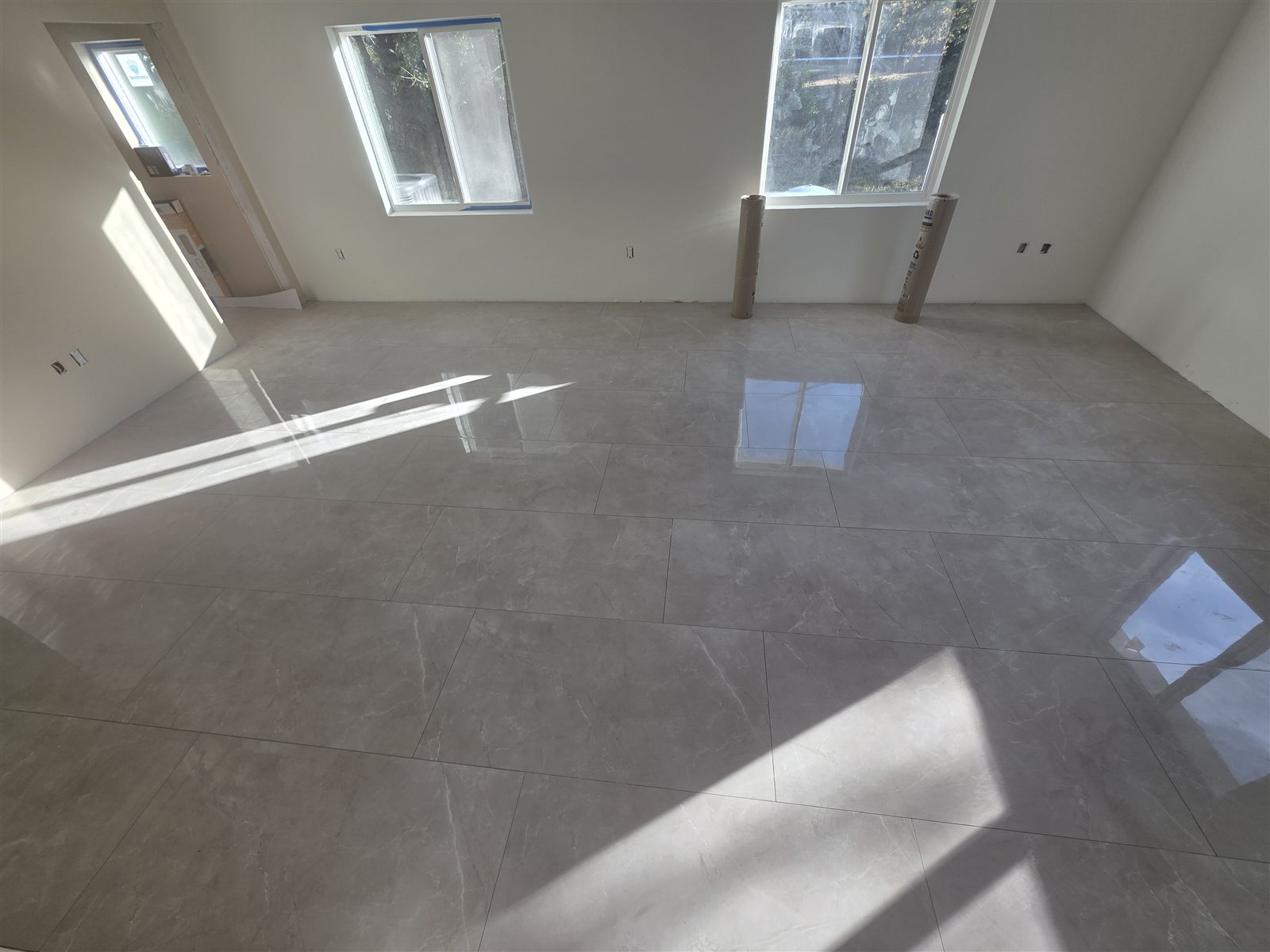
- Large-format and marble slab floor tile
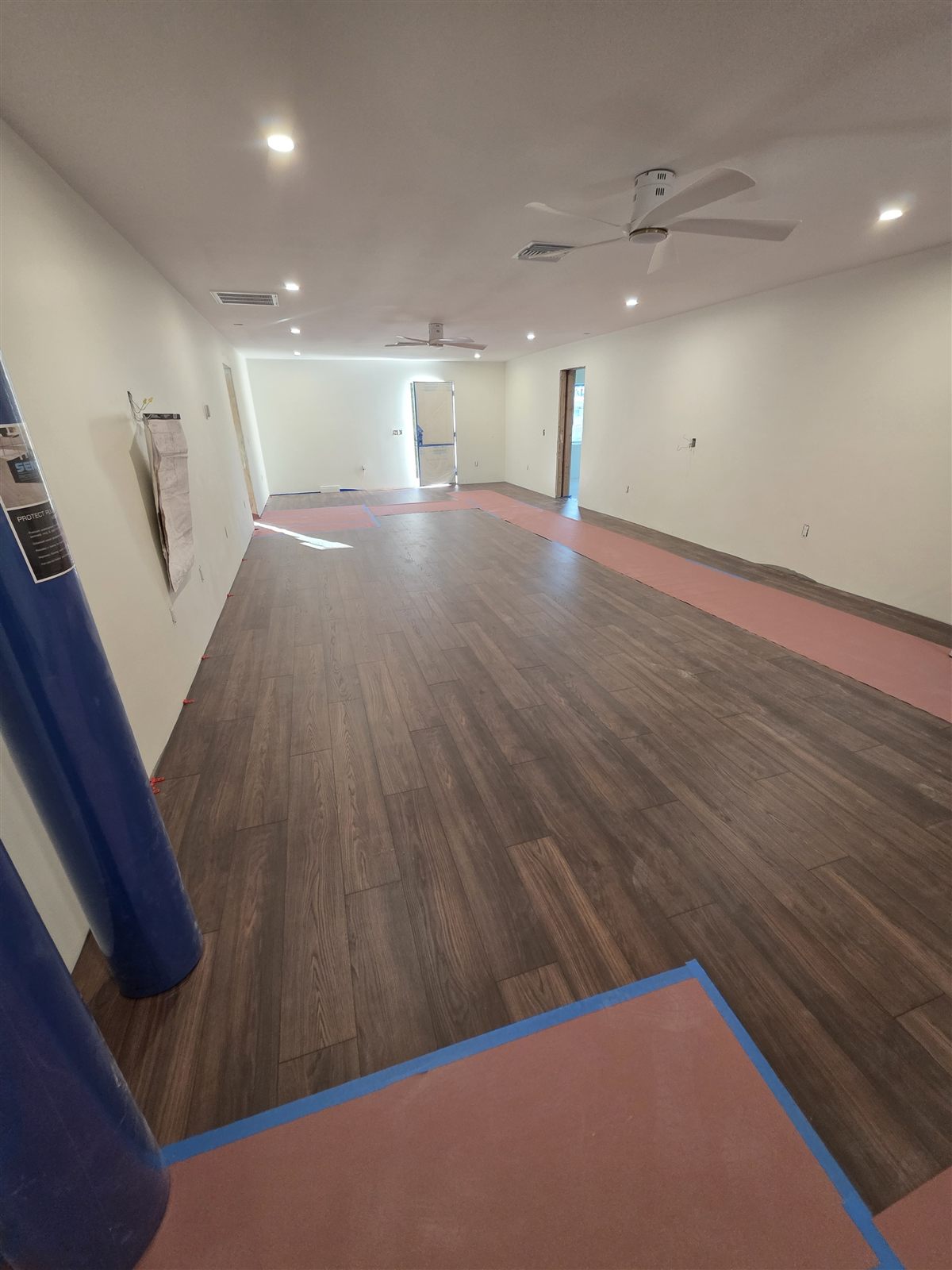
- Wood-look plank tile flooring
- Tile work beyond floors: backsplashes, feature walls, fireplace surrounds, and accent tile
- Flooring for kitchens, living areas, and whole-home renovations
- Flooring and tile installation for commercial spaces
- Subfloor prep and leveling before any material goes down
Backsplashes, Accent Walls, and Fireplace Surrounds Are Tile Work Too
A kitchen backsplash has to die cleanly into an outlet and a cabinet run. A fireplace surround needs its pattern centered on the one thing everyone in the room looks at every night. An accent wall or a mudroom carries tile nobody ever steps on but everybody sees. We plan, cut, and set all of it to the same standard as a floor, pattern lined up and grout lines consistent from one wall to the next, whether it's a single accent wall or a full commercial space, which is why tile is a named specialty here rather than a line item folded quietly into flooring.
What Happens Under the Tile Decides How Long a Floor Lasts
A floor that looks slightly uneven, or a tile that cracks inside the first year, almost always traces back to something that happened before the flooring itself went down: an unlevel subfloor, skipped underlayment, or tile set without the right spacing and movement gaps around the edges of the room. None of that is visible once the floor is finished, which is precisely why it's the part of the job that gets compressed when a crew is trying to start and finish a whole house inside a week.
The economics behind that are worth understanding as a homeowner. Prep is the least profitable part of a flooring job, since it burns real hours and produces nothing anyone can photograph, and a cheaper bonding mortar or a helper who has laid tile only a handful of times can still turn out a hallway that looks fine on day one. All of it saves the contractor a few hours today, and it's you paying for a cracked floor two years from now.
Five Things That Happen Before a Single Tile Goes Down
- The old floor comes up and the substrate gets seen bare. Tiling straight over an existing floor is faster, and it also buries whatever is wrong underneath it for the next person to find.
- The floor gets read with a straightedge and mapped. High and low spots get marked in chalk across the whole room instead of spot-checked in the middle.
- Highs ground down, lows filled, and the fill left alone to cure. Self-leveling compound has to genuinely set before any weight goes on it, and that day of waiting is a day nobody is billing for, which is exactly why it's under the most pressure to get shortened. Large-format tile and long plank runs are the least forgiving materials in the trade about this: an eighth of an inch of dip under a two-foot tile becomes a hollow spot, a hollow spot becomes a crack, and the crack turns up eight months later in the middle of a living room. So the floor gets the flat surface the material needs, and the compound gets the time it needs.
- The layout gets dry-laid from the sightline that matters. We set the pattern off the wall you see walking into the room, so the thin slivers of cut tile end up where nobody's eye lands.
- Tile set with full mortar coverage and movement gaps at the perimeter. Florida floors expand and contract with heat and humidity, so the perimeter gap that lets a floor move stays in and hides under the baseboard rather than getting filled solid.
Same standard for a single room as for a whole-home flooring replacement, with our own crew on it and an owner-operator either working alongside them or overseeing the job directly. The floor stays flat, and it stays put.